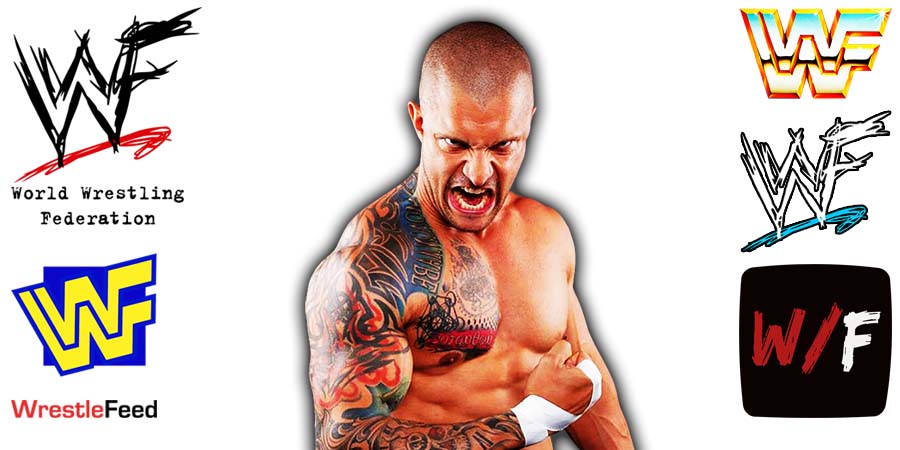
• “This was all one big work. I was the one getting worked” – Karrion Kross On WWE Departure
Karrion Kross left WWE after losing to Sami Zayn at SummerSlam 2025, as his contract expired. Fans thought this was a work and he’d eventually return. Now, it looks like that wasn’t the case.
In his “One Big Work” documentary, Kross said he was the one getting worked by WWE, not the fans:
“‘Is this all a big work?’ Is that what you’re asking me, is this a work? Is this a big elaborate, intricate work where I come back and say ‘surprise’?
The answer to that question is, in a sense, yes, this was all one big work. The worst part about it, though, is that it’s not the work everybody thought it was because I was the one getting worked.”
During an interview on The Ariel Helwani Show in August, Kross explained why he didn’t accept WWE’s new contract offer:
“I got the offer. I wanted to know how they came to the valuation of that offer. Just wanted some information, some metrics, some analytics that’s supporting to, ‘Hey, this is how we got here.’
When I inquired about that, they were unwilling to provide that information and told me they had 24 hours to agree to the offer or they were rescinding it.
The next day, we talk. I ask if they have the information. They don’t. I said, I can’t make an informed decision without the information. I’d like to keep the dialog open. They rescinded the offer, and that’s actually where we’re at.
The goal has always been to be with WWE. My wife and I still want to be with WWE. I’m at the table for conversations. I did not step out of the conversation. We still want to be there. We still want to work it out.”
Kross also noted that WWE didn’t offer Scarlett a new contract, as they wanted to deal with him first. Kross went on a reveal that he has received offers from top promotion, but not AEW, as they think this situation is a work.
• Dolph Ziggler Explains Why Vince McMahon Never Saw Him As “The Top Guy”
In his Insight podcast interview with Chris Van Vliet, Dolph Ziggler aka Nic Nemeth reflected on Vince McMahon’s perception of him during his near two-decade WWE run.
Despite being a two-time World Heavyweight Champion, Ziggler said Vince never truly viewed him as “the top guy.” He revealed that McMahon liked his work ethic and charisma but didn’t see him as the face of the company.
According to Nemeth, Vince saw him more as “the guy who gets the girls” – someone who could pull off romantic storylines or flashy segments, but not someone to build the brand around. Nemeth joked that McMahon seemed to reward him with on-screen kisses and relationships instead of championship pushes.
He said he accepted it over time but always felt limited by that ceiling. “Vince liked my work, but didn’t believe I should be the World Champion,” said Ziggler.
Looking back, Nemeth said he now understands that WWE’s creative philosophy often boxed performers into roles based on perception rather than potential. For him, that meant being seen as entertaining but replaceable.
• Raven Admits To Using PEDs: “I got those Jewish genetics that are only good for brain”
During his interview on The Ariel Helwani Show, Raven openly admitted to using performance-enhancing drugs (PEDs) during his wrestling career, stating that “everyone did” at the time.
Raven said that early in his career, he was heavily focused on achieving a bodybuilder’s physique and would have taken steroids regardless of wrestling’s culture because he wanted to look like his idols. His desire for a sculpted body came from personal preference rather than pressure from promoters.
“I would have done them anyway because I wanted to be a bodybuilder. I mean, I wanted to look like a bodybuilder my whole life. But I got those Jewish genetics that are only good for brain function but not so good for physicality.”
He clarified that he eventually got clean before joining the WWF in 2000, having already given up both PEDs and recreational drugs by that point. However, he didn’t shy away from acknowledging how deeply involved he once was in that lifestyle.
Raven’s comments shed light on the locker-room realities of the 1990s, when steroids were common and often viewed as necessary for wrestlers to succeed. While he didn’t condemn others for doing the same, he reflected on the long-term damage that lifestyle inflicted on his body – from head trauma to his current Parkinson’s diagnosis.